
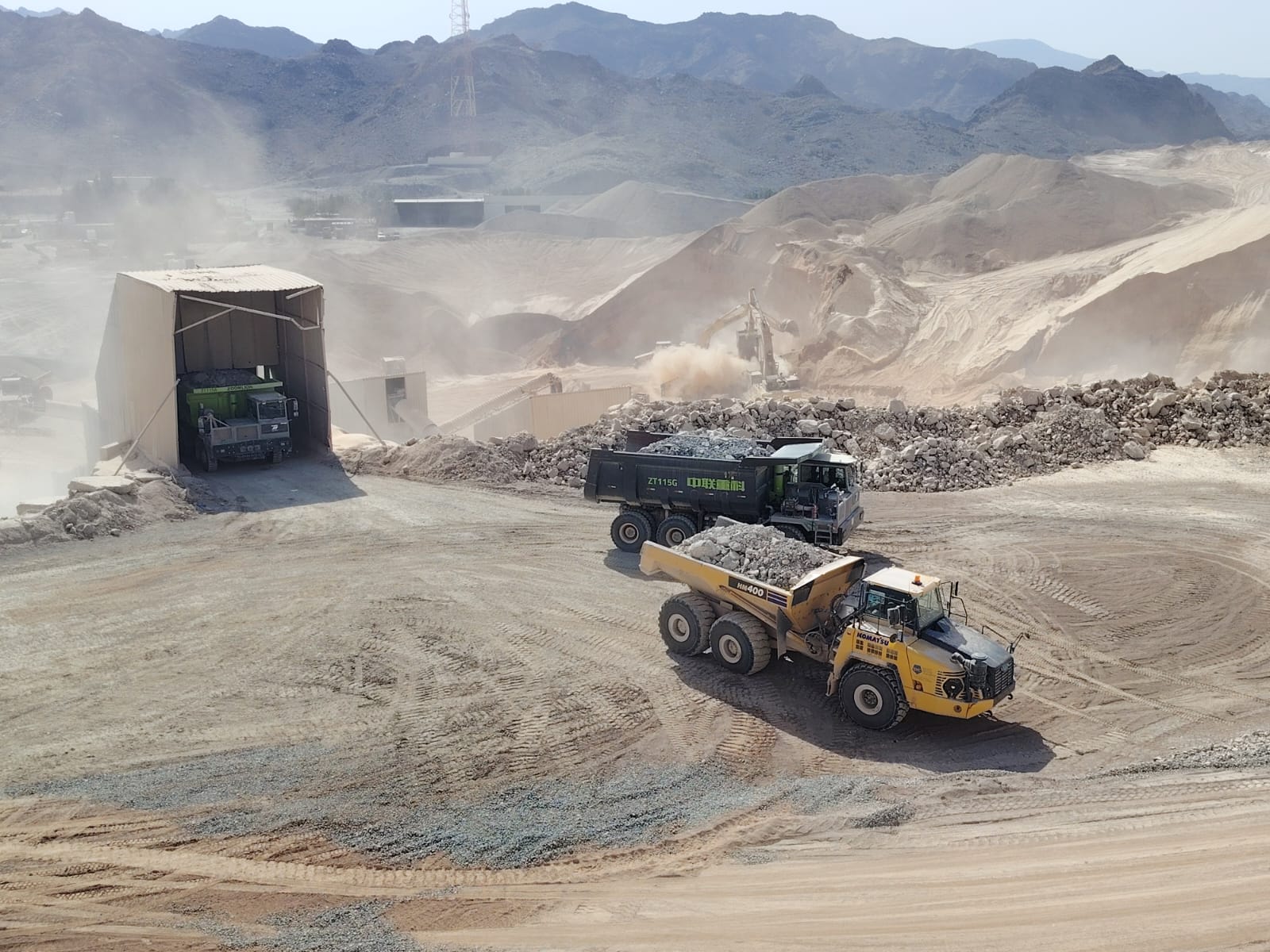
Mining has always been a cornerstone of industrial development, supplying the raw materials needed for infrastructure, manufacturing, energy production, and technology. As mineral demand continues to grow, mining companies require efficient, safe, and cost-effective methods to extract valuable resources. One of the most critical processes that make large-scale mining possible is drilling and blasting.
Modern drilling and blasting techniques have evolved significantly over the years. Today, advanced equipment, precise blast designs, and strict safety protocols enable mining companies to improve productivity while minimizing environmental impact.
At Mas Rock Engineering, we specialize in providing professional drilling and blasting solutions that maximize operational efficiency while maintaining the highest standards of safety and precision.
What is Drilling and Blasting?
Drilling and blasting is a controlled excavation technique used to break hard rock into manageable fragments. It is widely employed in:
- Surface mining
- Underground mining
- Quarry operations
- Road construction
- Tunnel excavation
- Infrastructure development
- Dam construction
The process involves drilling strategically positioned holes into rock formations, placing explosives within these holes, and detonating them according to a carefully engineered blast sequence.
The objective is to fragment rock efficiently while minimizing damage to surrounding structures and reducing operational costs.
Why Drilling and Blasting is Essential in Modern Mining
1. Improves Mining Efficiency
Modern mines operate on tight production schedules. Mechanical excavation alone cannot efficiently remove extremely hard rock formations.
Proper drilling and blasting:
- Accelerates rock removal
- Increases production rates
- Reduces excavation time
- Enhances equipment productivity
- Improves mine planning
Efficient blasting creates rock fragments that are easier to transport and process.
2. Reduces Operational Costs
Well-designed blast patterns significantly reduce overall mining expenses.
Benefits include:
- Lower fuel consumption
- Reduced equipment wear
- Faster loading cycles
- Lower crushing costs
- Reduced labor requirements
A properly fragmented rock mass requires less secondary breaking, resulting in substantial cost savings.
3. Maximizes Resource Recovery
Precision drilling helps mining companies recover more valuable minerals while minimizing waste.
Modern blast design enables:
- Better ore recovery
- Reduced dilution
- Improved grade control
- Higher profitability
Accurate blasting ensures that valuable mineral deposits remain intact during excavation.
4. Enables Safe Excavation
Safety is one of the biggest priorities in mining operations.
Professional drilling and blasting companies implement:
- Blast design analysis
- Risk assessments
- Vibration monitoring
- Controlled explosive loading
- Safe initiation systems
- Blast exclusion zones
When performed correctly, controlled blasting reduces hazards associated with unstable rock masses.
The Drilling and Blasting Process
Step 1: Geological Assessment
Mining engineers evaluate:
- Rock strength
- Geological structures
- Fracture patterns
- Mineral deposits
- Groundwater conditions
This information determines the most suitable blast design.
Step 2: Blast Design
Blast engineers calculate:
- Hole diameter
- Hole spacing
- Burden
- Hole depth
- Explosive quantity
- Delay timing
A precise blast design ensures optimal rock fragmentation.
Step 3: Drilling
Specialized drilling rigs create holes according to engineering specifications.
Modern drilling equipment offers:
- GPS guidance
- Automated positioning
- High drilling accuracy
- Faster drilling speeds
Step 4: Charging Explosives
Qualified professionals load explosives into drilled holes.
Common explosive products include:
- ANFO
- Emulsion explosives
- Bulk explosives
- Primers
- Detonators
Explosives are carefully selected based on geological conditions.
Step 5: Blast Initiation
Electronic or non-electric detonators trigger the blast according to predetermined delay sequences.
Controlled timing improves fragmentation while reducing vibration.
Step 6: Post-Blast Inspection
Engineers inspect:
- Rock fragmentation
- Blast performance
- Fly rock
- Wall stability
- Safety conditions
The results are analyzed to optimize future blasting operations.
Benefits of Controlled Blasting
Modern controlled blasting offers numerous advantages over traditional blasting methods.
Better Rock Fragmentation
Proper blast design creates uniform rock sizes, making loading and crushing more efficient.
Reduced Ground Vibrations
Electronic detonators minimize vibration and protect nearby structures.
Lower Noise Levels
Advanced blasting techniques help reduce excessive noise during operations.
Less Fly Rock
Controlled energy distribution significantly decreases the risk of dangerous flying debris.
Improved Wall Stability
Carefully planned blasts preserve pit walls and underground tunnels.
Modern Technologies Used in Drilling and Blasting
Mining companies increasingly rely on innovative technologies to improve blasting accuracy.
These include:
GPS-Based Drill Navigation
Improves drilling precision and reduces deviation.
Drone Surveys
Generate highly accurate mine maps before and after blasting.
Blast Simulation Software
Predicts fragmentation and blast performance before execution.
Electronic Detonators
Offer millisecond timing accuracy for controlled energy release.
Vibration Monitoring Systems
Measure blast impacts to ensure regulatory compliance.
Environmental Considerations
Sustainable mining practices require minimizing environmental impacts during blasting.
Responsible drilling and blasting operations focus on:
- Dust suppression
- Noise control
- Vibration management
- Air overpressure reduction
- Efficient explosive use
- Waste minimization
Modern engineering practices help mines operate more responsibly while maintaining productivity.
Common Challenges in Mining Blasting
Mining environments present several challenges, including:
Hard Rock Conditions
Different rock types require customized blast designs.
Variable Geology
Changing geological formations affect explosive performance.
Weather Conditions
Rain, wind, and groundwater influence drilling and blasting operations.
Environmental Regulations
Mining companies must comply with local safety and environmental standards.
Nearby Infrastructure
Controlled blasting protects roads, buildings, pipelines, and utility networks.
Why Choose Professional Drilling and Blasting Services?
Experienced blasting contractors provide:
- Accurate blast planning
- Certified blasting personnel
- Modern drilling equipment
- Regulatory compliance
- Safety management
- Efficient project execution
Professional expertise minimizes risks while maximizing operational performance.
Why Choose Mas Rock Engineering?
At Mas Rock Engineering, we deliver comprehensive drilling and blasting solutions tailored to the needs of mining, quarrying, and infrastructure projects.
Our strengths include:
- Experienced mining engineers
- Advanced drilling equipment
- Precision blast design
- Strict safety protocols
- Environmentally responsible practices
- Cost-effective project delivery
- Reliable project management
- Commitment to operational excellence
We work closely with clients to ensure every blasting operation is efficient, safe, and aligned with project objectives.
Future of Drilling and Blasting
The mining industry continues to embrace innovation. Emerging technologies such as artificial intelligence, autonomous drilling systems, real-time blast monitoring, digital mine planning, and predictive analytics are transforming drilling and blasting operations.
These advancements improve productivity, enhance worker safety, reduce environmental impact, and support more sustainable mining practices. Companies that adopt modern technologies are better positioned to meet increasing demand while maintaining operational efficiency.
Conclusion
Drilling and blasting remain fundamental to modern mining operations. When planned and executed correctly, these processes improve productivity, reduce operational costs, maximize resource recovery, and enhance safety.
As mining projects become more complex, partnering with an experienced engineering company becomes increasingly important. Mas Rock Engineering combines technical expertise, advanced equipment, and a commitment to safety to deliver reliable drilling and blasting solutions for mining, quarrying, and infrastructure projects.
Whether your project involves surface mining, underground excavation, or large-scale rock removal, Mas Rock Engineering provides the expertise needed to achieve efficient, safe, and sustainable results.
Frequently Asked Questions (FAQs)
1. What is drilling and blasting in mining?
Drilling and blasting is a controlled excavation method where holes are drilled into rock, filled with explosives, and detonated to break the rock into manageable fragments for mining or construction.
2. Why is controlled blasting important?
Controlled blasting improves safety, reduces ground vibration, minimizes fly rock, optimizes rock fragmentation, and helps protect nearby structures and the environment.
3. What industries use drilling and blasting services?
Drilling and blasting is widely used in mining, quarrying, road construction, tunneling, dam construction, infrastructure development, and large-scale excavation projects.
4. How does modern technology improve blasting operations?
Technologies such as GPS-guided drilling, drone surveys, blast simulation software, electronic detonators, and vibration monitoring systems enhance precision, safety, and operational efficiency.
5. Why should I choose Mas Rock Engineering for drilling and blasting services?
Mas Rock Engineering offers experienced engineers, advanced equipment, customized blast designs, strict safety standards, and environmentally responsible practices to deliver efficient and reliable results for mining and infrastructure projects.

